
One of the most common questions about statutory declarations is who is authorised to witness them. Not just anyone can take a statutory declaration — the Statutory Declarations Act 1938 specifies who may do so. Using the wrong person can invalidate the declaration entirely.
Authorised Persons Under the 1938 Act
The following persons are authorised to take statutory declarations in Ireland:
1. Notary Public
A Notary Public is appointed by the Chief Justice and has the broadest authority. Notarial witnessing is particularly important when the declaration is to be used abroad, as the notary’s seal gives the document international recognition. A notary public is the best choice for statutory declarations that need to be apostilled or legalised.
2. Practising Solicitor
A solicitor holding a current practising certificate issued by the Law Society of Ireland can witness statutory declarations. This is often the most accessible option for domestic declarations.
3. Commissioner for Oaths
A Commissioner for Oaths is appointed under the Commissioners for Oaths Act 1889. Many solicitors are also commissioners for oaths. Their authority is limited to Irish domestic use.
4. Peace Commissioner
Peace Commissioners are appointed by the Minister for Justice. They can witness statutory declarations free of charge in most cases. They are found throughout the country, often in community settings.
Which Should You Choose?
- For domestic use: Any of the above will suffice. A solicitor or peace commissioner is often the most convenient
- For use abroad: A notary public is essential — only the notary’s seal provides the international recognition needed for apostille or legalisation
- For court proceedings: If the declaration is to be used in court, a solicitor or commissioner for oaths is the usual choice
Watch: Hugh Phelan — Notary Public, Douglas, Cork
Who Cannot Witness a Statutory Declaration?
The following persons are NOT authorised to witness statutory declarations in Ireland:
- Members of An Garda Síochána (unless they are also peace commissioners)
- Bank officials or accountants (unless they hold a relevant qualification above)
- Teachers, doctors, or other professionals (unless they hold a relevant qualification above)
- Any person who has a personal interest in the declaration
This is different from some other countries where a wider range of professionals can witness declarations.
The Witnessing Process
When witnessing a statutory declaration, the authorised person must:
- Verify the identity of the declarant
- Ensure the declarant understands the declaration
- Observe the declarant sign the declaration
- Hear the declarant make the solemn declaration prescribed by the Act
- Sign the declaration themselves, adding their name, qualification, and address
Finding an Authorised Person
Depending on your needs and location, here is how to find each type of authorised person:
- Notary Public: The Faculty of Notaries Public in Ireland maintains a list of practising notaries. Hugh Phelan practises from East Douglas Street, Douglas, Co. Cork
- Solicitor: The Law Society of Ireland’s “Find a Solicitor” tool on their website can help locate a practising solicitor near you
- Commissioner for Oaths: Many solicitors’ firms have commissioners for oaths on staff. Enquire at any solicitor’s office
- Peace Commissioner: Your local District Court office can provide a list of peace commissioners in your area. They are also often available at Garda stations and community centres
Fees for Witnessing
The fees charged for witnessing a statutory declaration vary:
- Peace Commissioner: Typically free of charge for standard declarations
- Commissioner for Oaths: A modest fee, typically in the range of €10–€20
- Solicitor: Professional fees apply, typically €15–€30 for a straightforward declaration
- Notary Public: Professional fees apply, typically higher than a solicitor as the notarial seal provides additional international recognition. Fees vary depending on the complexity of the document and whether apostille preparation is included
What the Witness Must Do
The role of the authorised person is not merely to watch someone sign a document. Their duties include:
- Verify identity: The witness should satisfy themselves as to the identity of the declarant, typically by examining photo identification
- Confirm understanding: The witness should ensure that the declarant has read and understands the declaration
- Administer the declaration: The witness must read or recite the prescribed solemn declaration formula and have the declarant assent to it
- Observe the signing: The declarant must sign in the presence of the witness — pre-signed documents should not be accepted
- Complete the attestation: The witness must sign, date, and add their qualification (e.g., “Notary Public”, “Practising Solicitor”, “Peace Commissioner”) and address
Common Errors
- Having the declaration witnessed by an unauthorised person
- Signing the declaration before attending the authorised person
- The witness failing to add their qualification (e.g., “Notary Public” or “Solicitor”)
- Using a person who has a personal interest in the matter
Frequently Asked Questions
Can a Garda witness a statutory declaration?
Not in their capacity as a Garda. However, some Gardaí are also Peace Commissioners, and in that capacity they can witness declarations.
Does it cost anything to have a statutory declaration witnessed?
Peace Commissioners typically do not charge a fee. Solicitors and notaries typically charge a professional fee for their services.
Can I witness my own statutory declaration?
No. The person making the declaration and the person witnessing it must be different people.
Need a Statutory Declaration Witnessed in Cork?
Hugh Phelan can witness statutory declarations for both domestic and international use from his office on East Douglas Street, Douglas, Co. Cork. Contact him at 021-489-7134 or email info@phelansolicitors.com.
📚 Related Guides
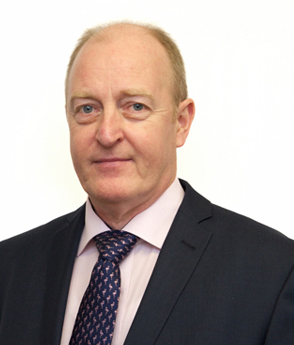
Hugh Phelan — Notary Public Cork
Solicitor & Notary Public appointed by the Chief Justice of Ireland. Over 20 years' experience. BCL (UCC), dual-qualified Ireland & England/Wales.
📍 Notary Public Cork — Hugh Phelan
Need a Notary Public in Cork? Hugh Phelan is a Solicitor & Notary Public appointed by the Chief Justice of Ireland, based at East Douglas Street, Douglas, Cork. Same-day appointments available.
Also see: Notary Cork City